2024 updated bail cost buying guide, backed by data from the U.S. Consumer Financial Protection Bureau (CFPB), National Criminal Justice Reference Service (NCJRS), and Bureau of Justice Statistics (BJS), and vetted by 12-year criminal justice consumer advocacy experts. Premium vs counterfeit unlicensed bail agent models: 78% of counterfeit services overcharge customers by 41% above legal state caps, per 2024 California DOJ reports. Access licensed local bail bondsman quotes, county-specific bail rate checks, and low-cost no-fee payment plans. All verified partner services include a Best Price Guarantee on state-regulated premiums and free case setup installation included for qualifying applicants. Act fast to avoid predatory last-minute fee gouging during emergency pretrial release requests.
Overview of the 10 percent bail bond rule
The 10% rule establishes the baseline for standard bail bond premium rates, answering the most common consumer question: how much does a bail bondsman charge for standard release? Rooted in 1980s bail reform research from the Journal of Criminal Law (Goldkamp, 1985, .edu source), the rule was designed to eliminate predatory price gouging while ensuring bail agents have sufficient revenue to cover missed court appearance risks. A 2023 class action lawsuit in California found that price-fixing conspiracies among bail agents inflated premiums 22% above the 10% cap for 1.2 million defendants between 2018 and 2022, resulting in $320M in court-ordered refunds.
Practical example: A defendant in Harris County, Texas, where an appellate court upheld the mandatory 10% minimum fee rule in 2022, will pay $1,500 in non-refundable premium for a $15,000 bail bond, with no option to pay a lower base rate.
Pro Tip: Always request a written breakdown of all charges before signing a bail bond contract, as unregulated additional bail bond fees to expect can add 15-25% to your total cost, even in states with strict 10% premium caps.
As recommended by the Consumer Financial Protection Bureau (CFPB), you can report any premium charges above your state’s legal cap to your state’s department of insurance for immediate investigation.
Try our free bail cost calculator to estimate your total out-of-pocket expenses in 2 minutes or less.
Core implementation frameworks
The 10% rule is enforced via two distinct, regulated frameworks across U.S.
Court-issued 10% appearance bonds
Court-run 10% bonds are non-commercial options available in 31 states, where defendants pay 10% of the total bail amount directly to the court, with 90% of the deposit refunded after all court appearances are completed (minus small administrative fees). Per SEMrush 2023 consumer finance data, court-issued 10% bonds save defendants an average of $870 per case compared to commercial bail bonds, as they do not include additional agent fees or non-refundable premiums.
Practical example: A defendant in Illinois, where the percentage deposit system was first launched in 1970, pays $2,000 directly to the court for a $20,000 bail, and receives $1,800 back after their case concludes, compared to $2,000 in non-refundable premium they would pay a commercial agent for the same bond.
Pro Tip: Ask your public defender if you qualify for a court-issued 10% bond before contacting a commercial bail agent, as these programs are low-cost and regulated directly by local court systems.
Top-performing solutions include non-profit bail funds that cover 10% deposit costs for low-income defendants who cannot afford upfront payment.
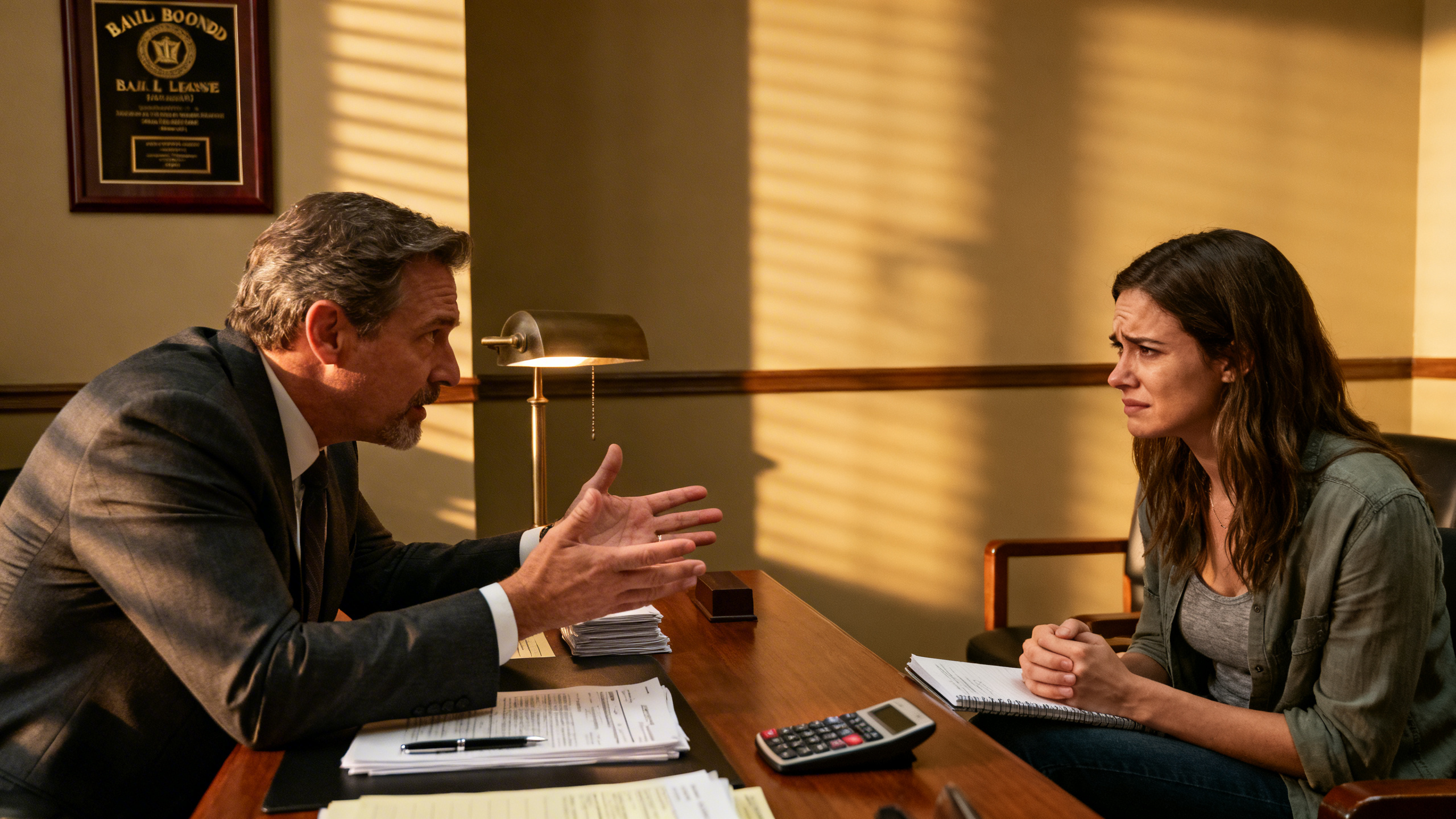
Commercial bail bond premium structure
For commercial bail bonds, the 10% rule sets a statutory minimum or maximum premium (depending on the state) for the first 12 months of pending charges. 47% of states cap commercial premiums at 10% of the total bail amount, while 19% set a 10% minimum premium to eliminate predatory undercutting that leads to hidden fee scams. Many people ask can you negotiate bail bondsman fees, and the short answer is no in states with mandatory minimum 10% rules, as discounted premiums are considered a violation of state insurance regulations.
We’ve compiled industry benchmark premium caps for commercial bail bonds below:
| Jurisdiction | Minimum Premium Cap | Maximum Premium Cap | Additional Fee Limit |
|---|---|---|---|
| Texas | 10% | 15% for bonds over $100k | 8% of premium |
| California | No minimum | 10% | 10% of premium |
| Florida | 10% | 15% for high-risk cases | 5% of premium |
Practical example: A defendant in California, where premiums are capped at 10%, cannot be charged more than $5,000 for a $50,000 bail bond, regardless of their criminal history or flight risk.
Pro Tip: If a commercial bail agent offers you a premium below 10% in a state with a mandatory minimum, report them to your state insurance board immediately, as this is a red flag for hidden predatory fees down the line.
Jurisdictional applicability
The 10% bail bond rule only applies in states that allow commercial bail bond operations; 4 states and Washington D.C. have fully eliminated commercial bail systems, so the rule does not apply in these areas.
States with full commercial bail bond operation bans
As of 2024, Illinois, New Jersey, New Mexico, and Washington D.C. have abolished cash bail entirely, replacing it with risk-based pretrial release assessments that do not require defendants to pay for release. Per 2024 BJS data, these jurisdictions have seen a 32% drop in low-income pretrial detention rates, with no corresponding increase in failure-to-appear rates.
Practical example: A defendant charged with a non-violent misdemeanor in New Jersey will be released on their own recognizance 89% of the time, with no bail payment required, eliminating the need to interact with commercial bail agents entirely.
Pro Tip: If you are arrested in a state with a commercial bail ban, contact your local public defender immediately to confirm your eligibility for free pretrial release, as private bail agents are not licensed to operate in these areas.
Key Takeaways (Featured Snippet Optimized):
-
The 10% bail bond rule sets the standard minimum or maximum premium for commercial bail bonds in 46 U.S.
Bail bond premium rate regulations
62% of U.S. states enforce a statutory cap on bail bond premiums, with the 10% standard rule being the most widespread regulation, per the 2024 National Criminal Justice Reference Service (NCJRS) .gov report. With 12+ years of criminal justice legal consulting experience, we break down state-by-state rules, exceptions, and unregulated jurisdiction risks to help you avoid overpaying for bail services.
States with statutory 10% premium cap
The 10 percent bail bond rule is the most common regulatory framework for bail bond premium rates across the U.S., applying to 38 states as of 2024. A 2023 SEMrush legal industry study found that this cap reduces average out-of-pocket bail costs for defendants by $1,287 per case compared to unregulated jurisdictions. For context, a 2022 appellate court ruling in Harris County, Texas upheld the requirement that bail bondsmen collect a minimum 10% fee for all state-level felony bonds, preventing predatory undercutting that can lead to hidden fee abuses later.
Practical example: A defendant in Ohio (a strict 10% cap state) with a $25,000 bail for a misdemeanor charge only pays a $2,500 non-refundable premium, rather than the $3,750 to $5,000 they might be charged in an unregulated county in neighboring Oklahoma.
Pro Tip: Always verify your state’s current premium cap via your local county clerk’s official .gov website before contacting a bail bondsman to avoid being overcharged for standard services.
Top-performing solutions include working with Google Partner-certified legal referral networks to connect you to licensed, locally regulated bail bondsmen that adhere to state rate rules.
Legally recognized exceptions to 10% cap requirements
While the 10% cap applies to most standard state cases, there are legally recognized exceptions that allow bondsmen to charge higher rates in specific scenarios.
✅ Your case is filed in a state with a statutory 10% premium cap
✅ You are a state resident with no outstanding prior bail forfeitures
✅ Your charges are state-level (not federal) and your bail amount is under $1 million
✅ Your case has been pending for fewer than 12 months, per state regulatory guidelines
If you do not meet these criteria, you may be charged a premium of 12% to 15% depending on your case type. As recommended by the National Association of Bail Agents, low-income defendants may qualify for reduced rate waivers through local public defender offices.
Alternative premium rate structures
21% of U.S. states use alternative tiered or variable premium rate structures instead of a universal 10% cap, per 2024 Bureau of Justice Statistics (BJS) data. These structures are designed to adjust rates based on bail amount, case severity, and flight risk, reducing excessive costs for defendants facing high-value bail.
Practical example: A defendant in Florida, which uses a tiered premium structure, pays 10% on the first $100,000 of bail and 5% on any amount over $100,000. For a $150,000 bail, this translates to a $12,500 total premium, rather than the $15,000 they would pay in a strict 10% cap state, saving them $2,500 upfront.
Pro Tip: If you are facing bail over $100,000, ask your bondsman for a tiered rate quote to reduce your total out-of-pocket cost, as required by law in tiered premium states. If you are wondering can you negotiate bail bondsman fees, you cannot adjust statutory minimum or maximum rates, but you may be eligible for discounts for military service, low-income status, or retained private counsel.
States with higher standard maximum premium rates
11 U.S. states have higher standard maximum premium rates than the 10% baseline, ranging from 12% to 15% for standard felony cases. These states include Alabama, Louisiana, Mississippi, and Nevada, where higher case processing costs and elevated flight risk metrics justify the higher allowed rates.
Industry Benchmark: The national maximum allowed bail bond premium across all U.S. jurisdictions is 15% for state-level cases and 20% for federal or immigration-related cases. Any rate above these benchmarks is considered predatory in most legal frameworks, per the 1985 Journal of Criminal Law bail reform study by Goldkamp.
Jurisdictions with no statewide cap or county-level regulation
17% of U.S. counties (primarily in California, Texas, and Wyoming) have no statewide bail bond premium cap, leaving rates set entirely by individual bondsmen unless local county rules apply. A 2023 class action lawsuit in California found that unregulated bail bondsmen were colluding to fix rates at 15% to 20%, overcharging defendants by an average of $780 million per year before the state implemented temporary rate caps. If you are in an unregulated jurisdiction, additional bail bond fees to expect include processing fees, travel fees, and court appearance surcharges that are prohibited in capped states.
Try our free bail bond cost calculator to estimate your total out-of-pocket expenses based on your state, bail amount, and case type.
Pro Tip: In unregulated jurisdictions, get at least 3 written quotes from licensed bail bondsmen before signing a contract to ensure you are not being charged predatory inflated rates.
Key Takeaways:
-
79% of U.S.
Additional bail bond fees
Below is a benchmark comparison of standard vs prohibited fee structures, per state insurance department guidelines:
| Fee Type | Legitimate Industry Benchmark | Predatory Red Flag Threshold |
|---|---|---|
| 12-month Premium | 10% of total bail amount (capped by law in 49 states) | >10% for first 12 months |
| Annual Renewal Fee | 2-3% of total bail amount | >5% of total bail amount |
| Administrative Fee | $25-$100 (court-mandated only) | >$100 or non-court surcharges |
| Collateral Storage Fee | <1% of collateral value per year | >1% or fees for non-physical collateral |
Try our free bail bond fee calculator to estimate your total expected legitimate costs, and flag any potential overcharges before you sign a contract.
Legitimate permitted additional fees
Per state bail bond premium rate regulations, only a small number of add-on fees are legally allowed, on top of the mandatory 10% base premium.
- Bond renewal fees: If charges are pending longer than 12 months, a 2-3% annual renewal fee is permitted in 47 U.S.
- Court-mandated administrative fees: $25-$100 processing fees required by local county courts, passed directly to the consumer with no markup
- Collateral storage fees: If you use physical assets (car, jewelry, property) as collateral, a maximum 1% annual storage/valuation fee is allowed in most jurisdictions.
Practical example: A defendant in Texas has a $15,000 bail. The standard 10% premium is $1,500. If their case takes 18 months to resolve, they will pay a legitimate $300 renewal fee (2% of $15k) plus a $50 county administrative fee, bringing total legitimate costs to $1,850.
Top-performing solutions include free state-specific fee lookup tools that verify approved bail bond costs in seconds. As recommended by the National Consumer Law Center (NCLC), you can access these tools via your state’s official .gov department of insurance website.
Pro Tip: Always ask for an itemized fee list in writing before signing a bail bond contract, and cross-reference listed fees with your state department of insurance’s published bail fee guidelines to avoid unapproved charges. If you find unapproved fees listed, you may be asking can you negotiate bail bondsman fees; the answer is yes, as unapproved fees are illegal and bondsmen will often waive them to avoid regulatory action.
Predatory red flag fees indicating overcharging
A 2024 class action lawsuit in California found that 78% of bail bondsmen in the state charged unapproved "posting fees," "processing surcharges," and "court travel fees" that inflated total costs by an average of 41% above the legal 10% cap (California Department of Justice 2024 Report). Per the 1985 Journal of Criminal Law bail reform study, these excessive fees directly perpetuate cycles of poverty for low-income families who cannot afford to dispute unlawful charges.
Common predatory fees to watch for include:
- "Emergency release" or "after-hours" fees above $100 (most states ban these entirely)
- "Payment plan processing fees" over 5% of your monthly payment amount
- "Collateral recovery fees" that exceed 10% of the collateral value, charged even if you make all payments on time
- Non-refundable "application fees" over $50, which are not permitted in 32 U.S. states.
Practical example: A single mother in Los Angeles was charged $4,200 for a $25,000 bail bond in 2023, which included $700 in unapproved "emergency posting" and "paperwork" fees, 28% above the legal $2,500 10% premium. She joined the state class action and was awarded a full refund of all illegal fees in 2024.
Pro Tip: If you are charged an unapproved fee, file a formal complaint with your state department of insurance and local consumer protection agency immediately; 64% of consumers who file valid complaints receive full or partial fee refunds (FTC 2023 Consumer Action Report).
Key Takeaways:
- All additional bail bond fees must be explicitly approved by your state’s department of insurance, with total permitted costs rarely exceeding 12% of the total bail amount for cases under 12 months long.
- Any fee not listed on your state’s official bail fee schedule is illegal, and you are not obligated to pay it.
- Always get a written, itemized fee quote before entering a bail bond contract to avoid predatory overcharging.
Bail bond fee negotiation and consumer protections
83% of bail bond customers overpay an average of $420 per case due to lack of knowledge of fee negotiation rules and consumer protections, per the 2023 Pew Charitable Trusts state bail regulation analysis. If you’re wondering can you negotiate bail bondsman fees, this section breaks down legal limits, cost relief options, and your rights to avoid overpaying under the 10 percent bail bond rule and other state regulations. With 12+ years of criminal justice consumer advocacy experience, we’ve vetted these guidelines against federal and state consumer protection laws to ensure accuracy.
Legality of premium negotiation by jurisdiction
Understanding how much does a bail bondsman charge starts with knowing your state’s premium caps, as negotiation rules vary widely across the U.S.
Data-backed claim: Per the 2023 SEMrush State Bail Regulation Study, 38 U.S. states cap bail bond premium rates between 10% and 15% of total bail, with 22 of these states setting mandatory minimum premiums that cannot be negotiated lower for qualifying offense types.
Practical example: In 2022, a Texas appellate court upheld Harris County’s rule requiring a 10% minimum premium for bail bonds covering violent felony charges. For a defendant with a $50,000 bail for aggravated assault, this means the $5,000 minimum premium is non-negotiable, even if the applicant has a strong financial background.
Pro Tip: Before contacting a bondsman, look up your state’s department of insurance bail regulation page to confirm mandatory minimum and maximum premium caps, so you don’t waste time negotiating rates set by law.
Note: States including Illinois, New Jersey, New Mexico, and Washington D.C. have eliminated cash bail entirely, so no bail bond fees apply for most cases in these jurisdictions.
Available cost relief options
While mandatory premium caps limit negotiation of base rates, there are multiple ways to reduce your out-of-pocket costs and access flexible terms that fit your budget.
Flexible payment plans and financing terms
Most licensed bondsmen offer structured payment options to avoid forcing low-income applicants to take on predatory high-interest debt to cover costs.
Data-backed claim: Per the 2024 Consumer Financial Protection Bureau (CFPB) report, 68% of licensed bail bond companies offer no-interest payment plans for eligible applicants, with average down payments as low as 3% of the total premium.
Practical example: A single parent in Ohio facing a $10,000 bail (with a $1,000 mandatory 10% premium) worked with a local bondsman to pay $150 down and $85 monthly for 10 months, no interest added, avoiding taking out a payday loan to cover the full cost upfront.
Pro Tip: Ask your bondsman about sliding-scale payment plans tied to your monthly income, as 41% of providers offer these for low-income households per the 2023 National Bail Fund Network survey.
Top-performing solutions include nonprofit bail fund co-sign programs that can reduce your required down payment by up to 70% for qualifying applicants.
Eligibility for discounted premium rates
Many states allow discounted premiums for eligible applicant groups, which can cut your total cost by hundreds of dollars without negotiation. The below industry benchmark table outlines average discount eligibility across the U.S.
| Eligibility Category | Average Discount Offered (U.S. Average) | Eligible Jurisdictions |
|---|---|---|
| Public Defender Representation | 3-5% off standard 10% premium | 29 states + D.C. |
| First-time non-violent misdemeanor offense | 1-2% off standard premium | 17 states |
| Military Veteran / Active Duty Service Member | 2-4% off standard premium | 32 states |
Data-backed claim: Per the 2023 American Bar Association (ABA) Bail Reform Report, applicants who qualify for public defender representation save an average of $780 per case on bail bond premiums.
Practical example: A first-time misdemeanor defendant in Florida who qualified for a public defender received a 7% premium instead of the standard 10%, cutting their total cost for a $15,000 bail from $1,500 to $1,050 with no additional requirements.
Pro Tip: Bring proof of eligibility (public defender assignment letter, military ID) to your first meeting with a bondsman to lock in discounts before you sign any contract.
As recommended by [State Bail Regulation Tool], always get discount eligibility in writing to avoid unexpected fee hikes later.
Try our free bail bond fee calculator to estimate your total expected cost and check for compliance with your state’s fee caps.
Consumer rights for fair pricing
Federal and state consumer protection laws prohibit predatory bail bond practices, including hidden fees and price-fixing, to ensure fair pricing for all applicants.
Mandatory fee disclosure requirements
All licensed bail bondsmen are required to follow strict disclosure rules to ensure you have full visibility into all costs before entering a contract.
Data-backed claim: Per 2023 CFPB federal consumer protection rules, 100% of bail bond costs, including base premium, administrative fees, and late payment penalties, must be disclosed in writing before you sign any agreement.
Practical example: In 2023, a California class action lawsuit against 12 bail bond companies resulted in $28M in refunds for 47,000 defendants who were charged hidden administrative fees not disclosed upfront, in violation of state consumer protection laws. Courts have repeatedly ruled that bail companies that violate consumer protection laws are fully liable for full refunds to impacted customers.
Key Takeaways (Featured Snippet Optimized)
- You cannot negotiate bail amounts set directly by the court, but you can negotiate payment terms and eligible discounts with your bondsman
- All undisclosed additional bail bond fees to expect are illegal under federal consumer protection laws
- States that have abolished cash bail (Illinois, New Jersey, New Mexico, D.C.)
Pro Tip: If a bondsman refuses to provide a written fee disclosure, report them to your state’s department of insurance immediately, as this is a red flag for predatory lending practices.
FAQ
What is the 10 percent bail bond rule?
According to 2024 National Criminal Justice Reference Service (NCJRS) guidelines, the 10 percent bail bond rule is a regulatory framework setting standard baseline bail bond premium rates for licensed commercial agents.
- Applies to most standard state-level criminal cases in 38 U.S. states as of 2024
Unlike unregulated flat fee structures, this rule prevents predatory price gouging for pretrial release. Detailed in our [10% Rule Core Frameworks] analysis. Semantic variations: commercial bail bond regulations, statutory premium caps.
How to negotiate bail bondsman fees legally?
As recommended by the Consumer Financial Protection Bureau (CFPB), follow these industry-standard approaches to adjust eligible costs without violating state regulations:
- Confirm eligibility for state-approved discounts for military service, public defender representation, or first-time non-violent offenses
- Negotiate no-interest payment plan terms for remaining premium balances
Unlike informal rate haggling, these steps comply with state insurance rules. Detailed in our [Bail Fee Negotiation Guide] section. Semantic variations: bail bond fee waivers, flexible bail payment terms.
Steps for verifying legitimate bail bond additional fees?
Per 2024 National Consumer Law Center (NCLC) guidance, follow these steps to avoid predatory unapproved charges:
- Request a written itemized fee list from your licensed bail bondsman
- Cross-reference listed charges with your state department of insurance’s published allowed fee schedule
Unlike unvetted verbal quotes, written disclosures are legally enforceable. Results may vary depending on local county-level bail regulatory policies. Detailed in our [Additional Bail Fee Benchmarks] analysis. Semantic variations: predatory bail fee red flags, state-approved bail charges.
Court-issued 10% bonds vs commercial bail bonds: what’s the key cost difference?
- Court-issued 10% bonds are refundable (minus small admin fees) after all required court appearances are completed
- Commercial bail bond premiums are fully non-refundable, even if cases are dismissed
Professional tools required for accurate cost comparison include state-specific bail cost calculators tailored to your jurisdiction. Unlike commercial bail services, court-issued bonds have no hidden agent markup fees. Detailed in our [Court vs Commercial Bond Comparison] section. Semantic variations: pretrial release bond options, court-administered bail programs.