If you want a happy Corgi, you need to start with early socialization and mental games. Corgis love routines, and they learn fast. You might notice some unique challenges with your pup, like:
- Nipping from herding instincts
- Barking a lot
- Stubbornness or trying to be the boss
- Feeling jealous of other pets or kids
- Getting anxious when left alone
Essential Corgi Care: A Complete Scientific Guide from Selection to Adulthood for ‘Short-Legged’ Dogs helps you understand these clever dogs and gives you the tools to raise a well-behaved friend.
Key Takeaways
- Train your Corgi when it is young. Start socialization and teach basic commands after day 49. This helps your Corgi learn good habits.
- Keep a steady routine every day. Feed, exercise, and play with your Corgi at the same times. This makes your Corgi feel safe.
- Check your Corgi’s weight often. Give high-quality food and fewer treats. This stops your Corgi from getting too heavy or sick.
- Give your Corgi things to do. Use toys and games that make your Corgi think. This keeps your Corgi busy and stops bad behavior.
- Take your Corgi to the vet often. Finding health problems early keeps your Corgi healthy and happy for a long time.
Corgi Traits and Needs
Lively Personality and Intelligence
Your Corgi is always full of energy. These dogs like to play and explore. They enjoy learning new things. Your Corgi may learn tricks very quickly. Their intelligence helps with training. But they get bored if left alone. If your Corgi has no toys or puzzles, you might find chewed shoes. You could see a mess in the living room. Change up games often. Teach new commands to keep your Corgi happy. Your Corgi will show you love with tail wags and attention.
Tip: Switch toys every week. This keeps your Corgi’s mind busy and stops boredom.
Herding Instincts and Behavior
Corgis were bred as herding dogs. They moved livestock with little help. You can see these instincts at home. If you have kids or pets, your Corgi may nip at heels. This is not aggression. It is their herding behavior. Corgis chase things that move fast. Herding breeds like Corgis may not like rough play. They may not be best for homes with very young kids. Good training helps guide these instincts. Try agility games or structured play.
- Corgis may nip at heels when playing.
- Chasing things is normal for them.
- They do not like rough play from young children.
Common Challenges
Raising a Corgi can be hard sometimes. Watch their weight because Corgis love food. They can gain weight easily. Training is tough since Corgis are smart but stubborn. Use positive reinforcement and be consistent. Health problems like hip dysplasia and obesity are common. Take your Corgi to the vet often.
| Health Issue | Description |
|---|---|
| Hip Dysplasia | This affects the hip joints. It causes pain and trouble moving. About 17% of Pembroke Corgis in the US have it. |
| Obesity | Corgis gain weight easily. You need to watch their food and exercise to stop health problems. |
- Watch how many calories your Corgi eats.
- Do not give table scraps.
- Feed meals that are high-quality and controlled.
- Use praise and treats for good behavior.
Training your Corgi takes time and patience. With the right steps, you will have a loyal and loving friend.
Preparing for Your Corgi
Puppy-Proofing and Supplies
Getting ready for your Corgi puppy means making your home safe and gathering the right gear. Puppies love to explore, so you need to block off stairs, balconies, and windows. Hide electrical cords and keep open flames out of reach. Store coins, hair ties, socks, and plastic bags where your puppy can’t find them. These things can cause choking or other injuries.
You’ll want to stock up on supplies before your puppy arrives. Here’s a quick checklist:
- High-quality dog food
- Stainless steel or ceramic food and water bowls
- Soft adjustable collar or harness
- 4-foot and 6-foot leash
- Engraved ID tags
- Comfy bed with a washable cover
- Crate and play pen
- Baby gates
- Toys and treats
- Grooming tools (slicker brush, nail clippers, toothbrush)
- Cleaning supplies for accidents
Tip: Set up a “den” area with a cozy bed. Your puppy will feel safe and sleep better.
Setting a Routine
Corgis feel happiest when life is predictable. You should feed your puppy at the same times every day. Take them outside for potty breaks after meals and naps. Play with your puppy and offer brain games to keep them busy. Stick to a regular bedtime so your Corgi knows when to settle down.
- Feed your puppy at set times.
- Take them out for potty breaks after eating and sleeping.
- Schedule playtime and walks.
- Keep bedtime consistent.
If you need to leave, start with short absences. Gradually increase your time away. Calm arrivals and departures help your puppy stay relaxed.
Creating a Safe Space
Every Corgi needs a spot to call their own. Pick a quiet corner for their crate or bed. Add soft blankets and a favorite toy. This space helps your puppy feel secure, especially when you’re not home. You can play soothing music or nature sounds to help them relax. Some owners use anxiety wraps for extra comfort.
Note: A safe space gives your Corgi a break from busy family life. It’s their retreat when things get noisy or stressful.
Essential Corgi Care: A Complete Scientific Guide from Selection to Adulthood for ‘Short-Legged’ Dogs
Choosing a Healthy Puppy
You want your Corgi to be strong from the start. When picking a puppy, look at health checks and breed rules. Corgis have short legs and long backs. Watch for joint and spine problems. Ask breeders for health papers and genetic test results. Look for bright eyes and a shiny coat. Pick a puppy that is playful and curious. Healthy puppies move around and explore.
Here is a table to help you check health signs when choosing your Corgi:
| Health Indicator | Evaluation Method |
|---|---|
| Hip evaluation | Hip ratings of tested dogs generally fall into OFA’s good-fair range/EU scheme’s B-C range. |
| Eye Evaluation | All strategies. |
| DNA – PRA (rcd3) (gPRA) | Coupled with Eye Evaluation; tested as affected % is low. |
| Obesity/diabetes | A concern in management of breed in all countries. |
| Elbow Evaluation | Testing conducted in multiple countries. |
| Shoulders, patellas | Clinical symptom evaluations conducted in multiple countries. |
| Spinal Evaluation | Clinical symptom evaluations conducted in multiple countries. |
| Reproduction | Concerns include bitch conformation, dystocia, fertility in females and males. |
| Urinary | Mentioned in Swedish population (Agria), UK health survey. |
| DNA – Chondrodystrophy (Type 1 IVDD) | Newer test; breed tendency to develop spinal issues due to conformation. |
| DNA – Degenerative Myelopathy | Testing done in the US; further study needed for populations outside the US. |
| DNA – vWD | Testing done in multiple countries. |
| DNA – Exercise Induced Collapse (EIC) | Awareness of condition in multiple countries; some testing done. |
| Other health concerns | Epilepsy, Hypothyroidism, Digestive Issues, Auto-immune issues, Heart murmur, Dentition issues, and cancers are present in multiple countries’ club health information. |
Essential Corgi Care: A Complete Scientific Guide from Selection to Adulthood for ‘Short-Legged’ Dogs means you should check for genetic risks too. Corgis often get chondrodystrophy and intervertebral disc disease. These problems hurt their spine and legs. Here is a chart that shows how common these risks are:
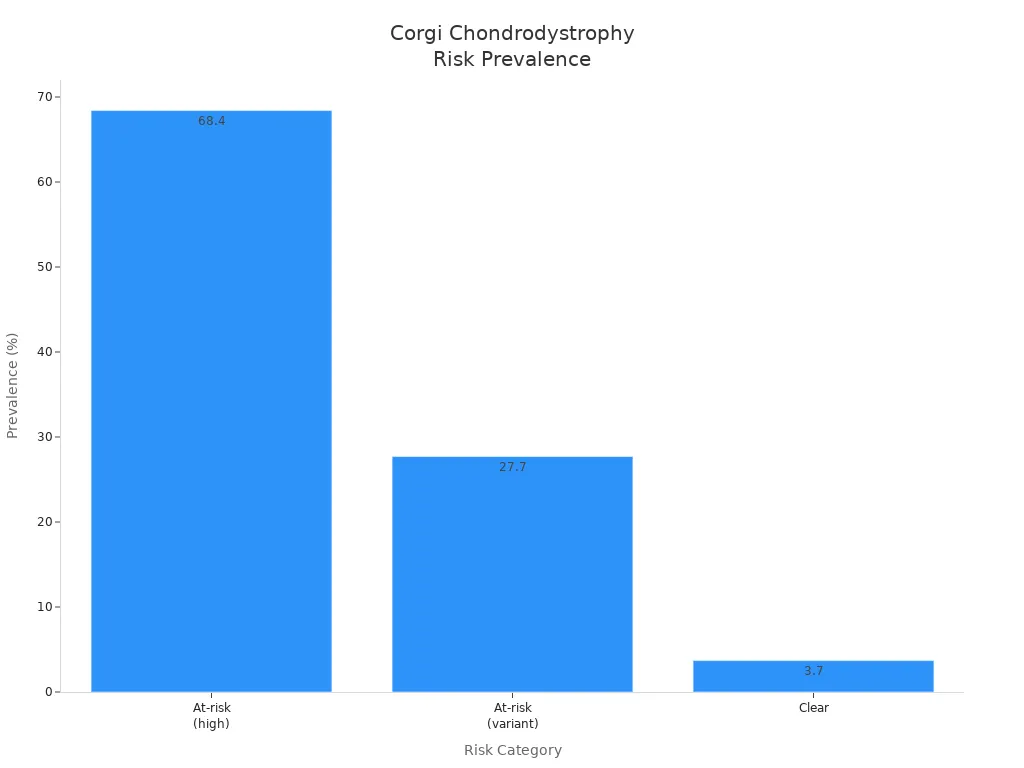
If a puppy has a rounded back or walks oddly, ask questions. Pick a puppy that stands tall and moves well. Always choose a breeder who tests for these problems. This step is important in the Essential Corgi Care: A Complete Scientific Guide from Selection to Adulthood for ‘Short-Legged’ Dogs.
Tip: Ask for proof of genetic tests before you bring your puppy home. This helps you avoid health problems later.
Early Socialization and Training
Your Corgi learns quickly. Start socialization and training early. The first week is key for building confidence. Show your puppy new things every day. Let them meet friendly people and calm dogs. Give treats for good behavior. Supervised playdates teach social skills.
- Take your puppy to safe places with new sights and sounds.
- Invite friends over so your puppy can greet strangers.
- Reward calm behavior with treats and praise.
- Set up playdates with other pets to build confidence.
Focus on training milestones too. Start with easy commands like “sit” and “stay.” Practice every day. Give your puppy exercise to use up energy. Go for walks and play games. Watch your puppy’s weight. Corgis love food, so keep treats small.
Essential Corgi Care: A Complete Scientific Guide from Selection to Adulthood for ‘Short-Legged’ Dogs means you should:
- Begin training early.
- Exercise your puppy every day.
- Plan a longer workout once a week.
- Check your puppy’s weight often.
Note: Early training helps your Corgi grow up friendly and well-behaved. You set the base for a happy life.
Adult Care Essentials
Corgis with short legs need special care as they grow. Their long backs and short legs stress their joints and spine. You must watch their weight and exercise. Adult Corgis have higher risks for joint problems. These include hip and elbow dysplasia, osteoarthritis, and intervertebral disc disease. Regular vet visits help you spot problems early.
Essential Corgi Care: A Complete Scientific Guide from Selection to Adulthood for ‘Short-Legged’ Dogs covers these adult care tips:
- Schedule regular vet check-ups.
- Feed a balanced diet made for Corgis.
- Watch your dog’s weight to stop obesity.
- Give daily exercise, including walks and playtime.
- Support joint health with supplements if your vet says so.
Corgis often get elbow dysplasia. About 16.6% get this problem. Osteoarthritis is common in older Corgis, especially with hip or elbow issues. Keep your Corgi active but do not let them jump from high places. Puppies need joint care, but adults face bigger risks.
Essential Corgi Care: A Complete Scientific Guide from Selection to Adulthood for ‘Short-Legged’ Dogs reminds you to:
- Use ramps instead of stairs when you can.
- Keep your Corgi at a healthy weight.
- Pick toys and games that do not hurt their joints.
- Watch for signs of pain or limping.
Tip: If your Corgi slows down or seems stiff, talk to your vet right away. Early care helps a lot.
Essential Corgi Care: A Complete Scientific Guide from Selection to Adulthood for ‘Short-Legged’ Dogs gives you a clear path from puppy to adult. You learn how to pick a healthy puppy, train and socialize them, and care for their special body shape. With these steps, you help your Corgi live a long, happy life.
Training Your Corgi

Starting Early and Consistent Reinforcement
You want your Corgi to listen and learn. Start training after the 49th day. Puppies reach a big milestone then. Before this age, their brains cannot control responses well. If you begin early, you set good habits for life.
- Puppies can start learning after the 49th day of age.
- The 49th day marks a key point in development.
- Training before this age is less effective.
Consistency matters. When you repeat commands and routines, your Corgi understands what you expect. Take a look at how steady reinforcement works:
| Evidence Description | Result |
|---|---|
| Dogs remained lying down during guest visits | 99.8% after training |
| Duration of down-stay with distractions | 60 seconds after training vs. 5 seconds before |
| Percentage of incorrect trials during training | 8.4% incorrect trials over 8 days |
Positive Methods and Hand Feeding
Corgis respond best to rewards and encouragement. Keep sessions short—just 5 to 10 minutes. Use treats, praise, or toys. End every session on a happy note. Try training in different places so your Corgi adapts. Patience and repetition help more than speed.
- Use rewards and consistency.
- Keep sessions short and frequent.
- Employ treats, praise, or toys.
- Always finish on a positive note.
- Train in various environments.
- Focus on repetition.
Positive reinforcement works best. Reward good behavior instead of punishing mistakes. Dogs trained this way show more excitement and less stress.
Hand feeding builds trust and helps your Corgi focus. You teach impulse control and prevent resource guarding. When you feed by hand, your dog learns to respond quickly. Shy or nervous dogs gain confidence. You also strengthen your bond during meal times.
Crate Training Basics
Crate training gives your Corgi a safe space. Start by letting your dog explore the crate. Toss in treats and feed meals inside. Slowly increase crate time while you are home. Reward calm behavior. When you leave, crate your dog for short periods. Keep it low-key to avoid stress. At night, place the crate near you. Move it slowly to where you want it.
- Introduce the crate with treats and meals.
- Practice longer crating periods at home.
- Crate your dog for short times when you leave.
- Crate your dog at night, close to you at first.
Managing Stubbornness
Corgis can be stubborn. Stay patient and use positive methods. If your dog ignores you, try a new reward or change the training spot. Keep commands simple. Celebrate small wins. Your Corgi will learn that listening brings good things. 😊
Tip: If your Corgi gets distracted, end the session and try again later. Short, fun lessons work best.
Daily Care and Health

Nutrition and Weight Management
You want your Corgi to stay fit and happy. These dogs love food, so you need to watch their weight closely. Most adult Corgis do best when you feed them about 2–3% of their ideal body weight each day. If your Corgi works hard or plays a lot, you might need to feed a little more. If your pup needs to lose weight, stick closer to 2% and check progress often. Always talk to your vet about the best diet for your dog. Corgis need daily exercise to balance their energy and weight. Herding games, long walks, and short runs work well.
Tip: Use a measuring cup for every meal. This helps you avoid overfeeding and keeps your Corgi healthy.
Exercise and Activities
Corgis have lots of energy. You should give your adult Corgi at least one hour of moderate to high-intensity exercise every day. Puppies need short, playful sessions to protect their growing joints. Senior Corgis may need gentler activities. Try daily walks on different routes to keep things interesting. Fetch and agility training challenge both mind and body. Swimming is a great choice because it is easy on their joints.
“Corgis can face certain issues due to their body structure. Avoid exercises like excessive jumping or climbing stairs to protect joint health. Regular exercise and a balanced diet are crucial to prevent obesity.”
Grooming and Shedding
Corgis shed a lot, so you need to brush them often. Regular brushing removes dead hair and spreads natural oils, keeping the coat shiny. Bathing your Corgi with a gentle dog shampoo keeps their skin clean and healthy. Feed a nutritious diet to support coat health. Ask your vet for food recommendations if you notice dull fur or dry skin.
| Grooming Task | How Often? |
|---|---|
| Brushing | 2–3 times a week |
| Bathing | Every 4–6 weeks |
| Nail Clipping | Monthly |
Regular Vet Checks
You want your Corgi to live a long, healthy life. Schedule vet checkups at least once a year, but twice-yearly wellness exams help catch problems early. Your vet will check for common issues like intervertebral disc disorders. Early detection makes treatment easier and keeps your Corgi feeling their best.
Note: Regular vet visits are the best way to spot health problems before they get serious.
Socialization and Enrichment
Meeting People and Other Dogs
You want your Corgi to feel comfortable around new faces. Start with short, positive experiences. Let your dog meet calm, friendly dogs during playdates. Use basic commands like “sit” and “stay” to help your Corgi stay relaxed when greeting someone new. Watch your dog’s body language. If you see signs of stress, step back and give your pup a break. Gradually introduce your Corgi to different people and animals. This helps prevent strong preferences or fear. Stay patient and keep each meeting fun. Your Corgi learns best when you make exploring feel safe.
- Arrange playdates with gentle dogs.
- Use commands to manage excitement.
- Watch for signs of stress.
- Introduce new people and pets slowly.
- Keep experiences positive and short.
Tip: Always end social sessions on a happy note. Your Corgi will look forward to the next adventure.
Mental Stimulation
Corgis need more than just physical exercise. You can challenge their minds with games and puzzles. Try interactive toys that make your dog think. Hide treats around the house and let your Corgi sniff them out. Teach new tricks or set up a simple agility course in your yard. Rotate activities to keep things fresh. Your dog will love food-dispensing toys and towel roll treat games. Tug-of-war with a twist also keeps your Corgi engaged.
- Interactive puzzle toys
- Hide and seek games
- Trick training
- DIY agility courses
- Food-dispensing toys
- Towel roll treat games
- Tug-of-war
- Brain-training games
- Rotate activities often
Note: Mental games help your Corgi stay sharp and happy.
Preventing Boredom
Boredom can lead to trouble. You might see chewing, barking, or digging if your Corgi feels bored. Keep your dog busy with fun games. Play hide-and-seek to use their nose and brain. Change up toys and activities every week. Give your Corgi new challenges to solve. Spend time together every day. Your attention means the world to your dog.
- Play hide-and-seek
- Switch toys weekly
- Try new games
- Spend quality time together
😊 Your Corgi will thank you with tail wags and happy barks!
Health Concerns and Prevention
Hip and Joint Issues
Corgis have adorable short legs and long backs, but these features can lead to hip and joint problems. You might hear about hip dysplasia. This condition means the hip joint does not fit together right. Your Corgi could show signs like stiffness or limping. Sometimes, your dog may not want to climb stairs or jump on the couch.
You can help your Corgi by keeping their weight in check. Portion-controlled meals work best. Try to avoid giving table scraps. Regular exercise helps, but pick low-impact activities. Swimming is a great choice. It keeps your dog active without putting stress on their joints. Skip high jumps or rough play to protect those little legs.
Tip: Keep your Corgi slim and active. This is the best way to protect their joints for years to come.
Signs of Illness
You know your Corgi best, so pay attention to changes in their behavior. Sometimes, the first sign of illness is a drop in excitement for walks or playtime. If your dog starts eating less, sleeps more, or acts distant, something could be wrong. Watch for stiffness after naps or a funny walk. These can point to joint or back pain.
Other warning signs include:
- Heavy panting, coughing, or changes in breathing
- Bumping into things or acting confused in new places
- Avoiding stairs or hesitating in dim light
If you notice any of these, call your vet. Early action can make a big difference.
Preventative Care
You can keep your Corgi healthy with a few simple habits. Schedule regular vet visits and keep up with vaccinations. Give your dog clean water every day and watch how much they drink. Brush their coat often to prevent skin problems. Use interactive toys and puzzles to keep their mind sharp.
Here’s a quick checklist for Corgi care:
| Care Task | Why It Matters |
|---|---|
| Vet check-ups & shots | Catch problems early |
| Mental stimulation | Prevents boredom and bad habits |
| Clean water | Supports kidney and overall health |
| Grooming | Stops skin infections and matting |
| Weight management | Reduces risk of joint and heart issues |
| Safe home environment | Protects from accidents and weather |
| Dental care | Prevents gum disease and bad breath |
| Know breed risks | Helps you plan for special needs |
Note: Ask your vet about genetic testing for Corgi-specific health risks. This helps you plan the best care for your pup.
Raising a happy, healthy Corgi takes effort, but you can do it! Focus on these steps:
- Start training and socialization early.
- Stick to routines and use positive methods.
- Watch your Corgi’s weight and health.
- Visit your vet for regular checkups.
Tip: Stay curious! Join Corgi groups, read books, or ask your vet for advice. You and your Corgi will learn and grow together.
FAQ
How often should you train your Corgi?
You should train your Corgi every day. Short sessions work best. Five to ten minutes is enough. Use treats and praise. Your dog learns faster with regular practice.
What is the best way to manage Corgi shedding?
Brush your Corgi two or three times a week. Use a slicker brush. Bath your dog every month. Feed a healthy diet. Regular grooming keeps shedding under control.
Can Corgis live in apartments?
Yes, Corgis can live in apartments. You need to give them daily walks and playtime. Mental games help too. Make sure your dog has a safe space to relax.
What signs show your Corgi needs a vet visit?
Watch for limping, loss of appetite, heavy panting, or changes in behavior. If your Corgi seems tired or avoids stairs, call your vet. Early care helps your dog stay healthy.